-
April 28, 2016
Rafael Gil. El hombre que se quiso matar (The Man Who Wanted to Kill Himself)
1942, original version, b/w, 93´
With a presentation by María Dolores Jiménez-Blanco, the curator of Campo Cerrado. Spanish Art 1939–1953 and professor of Art History at the Complutense University of Madrid.
In this film bitterness and critique seeps through the social fabric of comedy without hesitation, establishing an initial symbiosis of realism, costumbrismo and fantasy that would characterise a large part of post-war film texts.
Freed from social conventions after publicly deciding to commit suicide, Federico Solá, a young and brilliant architect without a future, becomes a danger and a source of irritation to the social fabric, comprising a journalist, an entrepreneur, a shopkeeper and an bourgeois loafer, who all come together as they anxiously await the consummation of the final promise. The afflictions of an isolated country in moral and economic collapse is, time and again, laid bare and exploited with the construction of this uncontrollable character which nothing can deny, and through dialogues – halfway between a one-act farce and the grotesque - that help to understand the masterly consideration of Wenceslao Fernández Flórez, the author of the novel which inspired the film, by the comedians of La Codorniz.
-
April 29, 2016
Carlos Arévalo
Ya viene el cortejo… (Here Comes the Parade…) 1939, original version, b/w, 11´
Rojo y negro (Red and Black), 1942, original version, b/w, 80´
The joint screening of both films affords a glimpse into the difficulties facing the new Regime in mobilising propaganda cinema, due to both the different ideological trends behind the military uprising and the syncretic and contradictory sources of Spanish fascism.
Ya viene el cortejo… shows the 1939 Victory March as it searches for its roots in the historical and iconographical motifs that seek to become immemorial. The film sets out to explain how the perfect and triumphant military formations in the march – seen in high-angle avant-garde shots – reach their fullest sense with fades back to an eternal past of medieval castles, cathedrals, religious symbols, and stereotypes of women wearing regional Spanish garments.
Rojo y negro, on the other hand, maintains Carlos Arévalo’s extreme experimental volition. Lost for over forty years and turned into an example of formal radicalism by historiography, the film bears witness to the extraordinary density of a genuinely Falangist work, whose visual findings and extreme formal avant-gardism see it become a kind of cinema substantiated by certain revolutionary sectors inside the Falange, before its ultimate domestication by the Regime. Written and directed by Arévalo, the film deploys dialectic and visual mechanisms of Eisenstein’s intellectual montage, even incorporating images from Battleship Potemkin (1925) to give filmic shape to the “need” for revolt.
-
May 5, 2016
Edgar Neville
Verbena (Madrid Carnival), 1941, original version, b/w, 30´
La torre de los siete jorobados (The Tower of the Seven Hunchbacks), 1944, original version, b/w, 99´
With a presentation by José Luis Castro de Paz, curator of the series and professor of Audiovisual Communication at the University of Santiago de Compostela.
The work of Edgar Neville, perhaps the most important film-maker from this decade, adopted a process which appropriated elements of popular culture in Spain, reformulating them into a new mode of expression. The joint screening of Verbena (1941) and La torre de los siete jorobados (1944) notes how minor popular forms, the serialised novel, the police novel, purist costumbrismo, and the one-act farce, with direct allusions to avant-garde movements, co-exist in these films.
Verbena, produced within a series of small cinematic dramatizations inspired by popular songs, describes a dark and touching microcosm comprising the anomalous alliance between the working classes and eccentric artists from circus. The other screening, La torre de los siete jorobados, synthesises a purist criminal tale with traits that are directly rooted in German Expressionism. The film combines two opposite worlds: on one side, the nocturnal, fantastical and bizarre, embodied in this inverted underground tower inhabited by deranged sages, dwarfs and hunchbacks exiled from the light. And on the other, the costumbrista and comic sketch from Madrid, much-loved by the film-maker; this time set in the last third of the 19th century.
-
May 6, 2016
Ignacio F. Iquino. Los ladrones somos gente honrada (We Thieves Are Honourable)
1943, original version, b/w, 102´
This film constitutes a paradigmatic example of the paradoxical and reflexive trend cultivated in the first post-war period and emerging from the complex melange between film and comical and visual resources stemming from absurd and avant-garde humour. With filmic precedents already in the Republican period, the model reached its definitive formulation at a time that coincided with the appearance of the renowned humorous magazine La Codorniz.
Deliberately artful and farcical, Los ladrones somos gente honrada is a parody of the plausibility of classical cinema as it breaches each of its norms. Everything operates in double meanings, paradox, antithesis and two faces that are entangled to fever pitch - “this house is a film”, one of the characters even utters. In a meandering and scattered way, the film pulls us out as viewers and drops us into the scene, or, similarly, dismantles the transparency of orthodox narrative to benefit our strengthened role as participants in an artificial and distant event.
-
May 12, 2016
Arturo Ruiz-Castillo. Las inquietudes de Shanti Andía (The Restlessness of Shanti Andía)
1946, original version, b/w, 121´
A collaborator of Federico García Lorca in La Barraca, art director of the publishing house Biblioteca Nueva and cultural spokesperson during the Republic, Arturo Ruiz-Castillo already had vast experience as a documentary-maker before debuting as a feature-film director with the adaptation of Las inquietudes de Shanti Andía (1946).
The film displays eye-catching discursive and formal strategies (narratological rigour, the deployment of the storyline in independent sequences that match the character’s psychological development, ornamental and compositional symbolism, inter-textual traits…) which bear witness to the artistic ambition of a director encompassed in the generation of “reformist” film-makers who, with vivid and bold aesthetic preoccupations, made their debut in the second half of the first decade under the France regime. Audaciously using Pío Baroja’s novel to discuss the present, the film turns oedipal conflicts and anxieties of desire into effective narrative copies of an unlivable time.
-
May 13, 2016
Carlos Serrano de Osma. Embrujo (The Spell)
1947, original version, b/w, 80´
Carlos Serrano de Osma is the visible leading figure in the self-styled “telluric” cinema, an informal circle of friends brought together around the magazine Cine experimental (1944–1946). A film-maker of enunciation and point of view, his films from this period incorporate the European legacy of Eisenstein and Pabst, and the American legacy of Welles, Siodmak and, above all, Hitchcock in a dense corpus of literary references and iconographic, autochthonous references, creating a poetic narrative style strongly imprinted with psychoanalysis.
Embrujo manages to – in the film-maker’s declared intention – “reach the shadows of the unconscious through the brilliant routes of folklore.” The film, a musical drama that is explicitly surreal, heart-rending and a moving reflection on desire and delirious passion, pieces together a highly risky operation in the film industry: combining the popular and the avant-garde, using the former as a cushion for the second.
-
May 19, 2016
Lorenzo Llobet-Gràcia. Vida en sombras (Life in the Shadows)
1948, original version, b/w, 90´
Punished to the point of ostracism by the censorship that would classify it as “inconceivable, unacceptable, inadmissible and disgraceful”, Vida en sombras is perforated by the trauma of the Civil War, which fights to make itself present. The beginnings of the conflict are narrated from the Republican side: news fragments from the time and a speech in Catalan by the president Companys are heard on the radio. In this milieu, the loss of the object of desire, embodied by the character Ana, who dies in the first skirmishes on the Barcelona streets, is bound up with unique force; thus tracing the stark identification between the harsh post-war period and the loss and scarring of the subject.
War, death, the incurable wound of desire: upon these three pillars, inextricably linked by the mise en scène, the film articulate its strategies of meaning. And further still, in a new, all-engulfing circle, cinema appears as a place where the subject’s desire (film-maker, protagonist, viewer) is radically affected.
-
May 20, 2016
Rafael Gil. La calle sin sol (The Sunless Street)
1948, original version, b/w, 95´
In an audacious mix of film noir, veristic will, and a costumbrista background, this distinctive thriller joins a series of obsessive and dense post-war films with sharp psychoanalytical resonances. Set in the desolate and poverty-stricken night-time of Barcelona’s Chinatown, inhabited by long-suffering survivors without hope, the story delves into dark crimes and destroyed families, and stresses the recreation of lumpen settings in the Catalan capital, depicted as a place of prostitution and illegal trade, where the residents represent at once the danger of extortion and the possibility of help. What ultimately emerges, via the film’s formal density, is a textual fabric torn at its seams, and understood as a symptom of the unconscious repression in the ruling classes in the face of social decomposition and rotting morals after the war.
-
May 26, 2016
Juan de Orduña. Locura de amor (Madness for Love)
1948, original version, b/w, 112´
The historical works directed by Juan de Orduña are the most original, complex and contradictory confluence of ideological interests from the Regime, from the eagerness for pomp and majesty from the producer CIFESA and from the tastes of the actual spectators. Locura de amor would constitute the greatest audience success of the season and one of the greatest in this decade; the “Spanishness” of these sorts of films was favoured by a large number of critics who saw in the historical literary, and not folkloric, adaptation a place in which film would have to redefine itself. The reasons for its undeniable popular allure were in its markedly melodramatic volition, characterised by the prominence of the suffering female figure. Built as a monumental and literal succession of living paintings, Locura de amor seeks to breathe life, not into events in History with a capital H but into the signs that have gone some way to building a romantic and timeless legend of the love story of Juana la Loca and Felipe el Hermoso.
-
May 27, 2016
José Antonio Nieves Conde. Surcos (Furrows)
1951, original version, b/w, 99´
The direct appearance of questions related to a lack of housing, unemployment, prostitution and rural exodus, in addition to the direct relationship with models of film such as Italian Neo-realism, define the exceptional nature of Surcos, both in this decade and generally throughout the history of Spanish cinema. The film’s emotional tension places it in the orbit of the film seasons that narrate the vicissitudes of a group of characters in a hostile environment, in an occupied country, a besieged city, an idea that manifests itself through the reiterated visual motif of furrows (prison bars, farmyard steps, an open grave, a ploughed field). On one side, claustrophobic confinement in small, shared spaces that are overpopulated or inhospitable; and on the other, an urban prison in which one cannot settle, feel at home and rest. Each sequence is structured through an exit or arrival, repeating the transition to nowhere that underpins the film to the grave, the final furrow.
Life in the Shadows. Spanish Cinema in a Labyrinth (1939–1953)
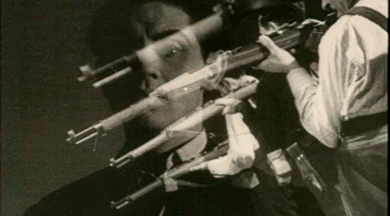
Held on 28, 29 Apr, 05, 06, 12, 13, 19, 20, 26, 27 May 2016
This film series, organised in conjunction with the exhibition Campo Cerrado. Spanish Art 1939–1953, focuses on post-war Spanish cinema, moving beyond the clichés that have buried it for a number of decades to present a dark yet fascinating filmic and historical labyrinth displaying conflicts, searches and objectives from the main narratives in a melancholic period, wounded and confrontational period.
The dictatorial regime organised film production in a diametrical opposite to the Republican period as it developed a system of economic autarchy and staunch ideological censorship. Nevertheless, contrary to widespread assertions, it also searched for continuity in the cultural traditions that had been put in place during the Second Republic. The new State failed, however, in its aim to construct “fascist” cinema on account of the disparity of conflicting views, thus demonstrated in the differences between long-standing conservatism in Raza (Race), by José Luis Sáenz de Heredia (1942), and the Falangist and Eisensteinian modernity of Rojo y negro (Red and Black), by Carlos Arévalo (1942). It would also err in its attempts to remove the folkloric and popular substrata which, despite fierce opposition by those who saw such elements as an abominable Popular Front-esque inheritance, managed to remain and was depicted in the work of director Edgar Neville - a pragmatic and measured cultural opposition with authentic and subversive titles like Verbena (Madrid Carnival, 1941), La torre de los siete jorobados (The Tower of the Seven Hunchbacks, 1944) and the Solanesque Domingo de carnaval (Carnival Sunday, 1945).
Despite the darkness of the period, comedy would become the most common genre. Drawing influences from the modern and absurd humour found in the magazine La Codorniz (founded in 1941 by Miguel Mihura), this decade’s filmography was predominated by a decidedly reflexive and meta-cinematic volition, expounding the difficulty facing fiction when it came to addressing the dark reality that had begun after the Civil War.
Dissidents in their own way, the films by the so-called “reformists” (Jose Antonio Nieves Conde, director of the transcendental Surcos (Furrows) in 1951; Arturo Ruiz-Castillo and Manuel Mur Oti) and the “tellurics” (Carlos Serrano de Osma, Lorenzo Llobet-Gràcia y Enrique Gómez), demonstrated a pronounced social concern and a striking “aesthetic commitment” – with European and avant-garde roots yet also strongly influenced by Hollywood – in addition to profound psychoanalytical concerns, conveying harrowing discourses about the life and times and the destructive consequences.
The irreparable loss of the loved object, often portrayed by a murdered, forbidden or missing woman, the ensuing melancholy and even madness and the narrative junctions that were customarily employed at the time can be read as metaphors of a devastated country, inhabited by sombre memories which carried an uncontrollable guilt complex. Thus, sadness, destruction and historical solitude became lucid “wounds of desire”.
Curatorship
José Luis Castro de Paz
Acknowledgments
Filmoteca Española
Más actividades
Rethinking Guernica
Monday and Sunday - Check times
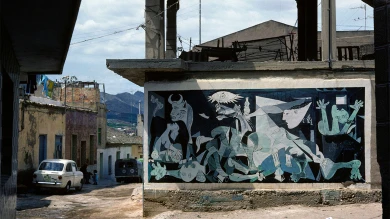
This guided tour activates the microsite Rethinking Guernica, a research project developed by the Museo Reina Sofía’s Collections Area, Conservation and Restoration Department and the Digital Projects Area of the Editorial Activities Department, assembling around 2,000 documents, interviews and counter-archives related to Pablo Picasso’s painting Guernica (1937).
The visit sets out an in-situ dialogue between the works hung around the painting and a selection of key documents, selected by the Museo’s Education Team and essential to gaining an idea of the picture’s historical background. Therefore, the tour looks to contribute to activating critical thought around this iconic and perpetually represented work and seeks to foster an approach which refreshes our gaze before the painting, thereby establishing a link with the present. Essentially revisiting to rethink Guernica.
Difficulty. Forms and Political Effects of Deviation in Writing and Contemporary Art
23 February – 14 December 2026 – Check programme
Difficulty. Forms and Political Effects of Deviation in Writing and Contemporary Art is a study group aligned towards thinking about how certain contemporary artistic and cultural practices resist the referentiality that dominates the logics of production and the consumption of present-day art. At the centre of this proposal are the concepts of difficulty and deviation, under which it brings together any procedure capable of preventing artistic forms from being absorbed by a meaning that appears previous to and independent from its expression. By ensuring the perceptibility of their languages, difficulty invites us to think of meaning as the effect of a signifying tension; that is, as a productive and creative activity which, from the materiality of art objects, frees aesthetic experience from the representational mandate and those who participate in it from the passiveness associated with tasks of mimesis and decoding.
The economy of the referential norm translates the social logic of capitalism, where insidious forms of capturing subjectivity and meaning operate. In the early 1980s, and adopting a Marxist framework, poet Ron Silliman highlighted how this logic entailed separating language from any mark, gesture, script, form or syntax that might link it to the conditions of its production, rendering it fetichised (as if without a subject) and alienating its users in a use for which they are not responsible. This double dispossession encodes the political strategy of referential objectivity: with no subject and no trace of its own consistency, language is merely an object, that reality in which it disappears.
The political uses of referentiality, more sophisticated today than ever before, sustain the neoliberal-extractivist phase of capitalism that crosses through present-day societies politically, economically and aesthetically. Against them, fugitive artistic practices emerge which, drawing from Black and Queer studies and other subaltern critical positions, reject the objective limits of what exists, invent forms to name what lies outside what has already been named, and return to subjects the capacity to participate in processes of emission and interpretation.
Read from the standpoint of artistic work, the objective capture of referentiality may be called transparency. Viewed from a social contract that reproduces inequality in fixed identity positions, transparent in this objectivity are, precisely, the discourses that maintain the status quo of domination. Opposite the inferno of these discourses, this group aims to collectively explore, through deviant or fugitive works, the paradise of language that Monique Wittig encountered in the estranged practices of literature. For the political potency of difficulty — that is, its contribution to the utopia of a free language among equals — depends on making visible, first, its own deviations; from there, the norm that those deviations transgress; and finally, the narrowness of a norm which in no way exhausts the possibilities ofsaying, signifying, referring and producing a world.
From this denouncement of referential alienation, fetishisation and capture, Difficulty. Forms and Political Effects of Deviation in Writing and Contemporary Art turns its attention to the strategies of resistance deployed by contemporary artists and poets. Its interest is directed towards proposals as evidently difficult or evasive as those of Gertrude Stein, Lyn Hejinian, Theresa Hak Kyung Cha, Kameelah Janan Rasheed, Kathy Acker, María Salgado and Ricardo Carreira, and as seemingly simple as those of Fernanda Laguna, Felix Gonzalez Torres and Cecilia Vicuña, among other examples that can be added according to the desires and dynamics of the group.
The ten study group sessions, held between February and December, combine theoretical seminars, work with artworks from the Museo Reina Sofía’s Collections and exhibitions, reading workshops and public programs. All these formats serve as spaces of encounter to think commonly about certain problems of poetics — that is, certain political questions — of contemporary writing and art.
Difficulty. Forms and Political Effects of Deviation in Writing and Contemporary Art inaugurates the research line Goodbye, Representation, through which the Museo Reina Sofía’s Studies Directorship seeks to explore the emergence of contemporary artistic and cultural practices which move away from representation as a dominant aesthetic-political strategy and redirect their attention toward artistic languages that question the tendency to point, name and fix, advocating instead for fugitive aesthetics. Over its three-year duration, this research line materializes in study groups, seminars, screenings and other forms of public programming.

CLINIC 2628. A Community of Writing and Research in the Arts
February – October 2026
Clinic 2628 is a project which supports and brings together writings which stem from the intention to offer a space and sustainable time for research work in art and culture. Framed within an academic context which is increasingly less receptive to the forms in which thinking happens and is expressed, the aim is to rescue the academic from its neoliberal trappings and thus recover the alliance between precision and intuition, work and desire. A further goal is to return writing to a commons which makes this possible through the monitoring of processes and the collectivisation of ideas, stances, references and strategies.
The endeavour, rooted in a collaboration between the Museo Reina Sofía’s Studies Directorship and the Artea research group, via the i+D Experimenta project, is shaped by three annual editions conceived as spaces of experimentation, discussion and a demonstration of writings critical of what is put forward by today’s academia.
What forces, forms and processes are at play when writing about art and aesthetics? In academia, in museums and in other cultural institutions, the practice of writing is traversed by productivist logics which jeopardise rhythms of research and experimentation. The imposition of both scientism inherent in the structure of “the paper” and the quantifying of results which demand a criterion of quality and visibility sterilise and smoothen, from the outset, the coarseness that is particular to writing understood from the concrete part of language: phonic, graphic, syntactic and grammatical resistance connecting the language user to the community the language unites and activates. They also sterilise the roughness enmeshed in the same desire to write, the intuitive, clear and confusing pathways that once again connect the writer to those reading and writing, participating in a common good that is at once discovered and produced.
The progressive commercialisation of knowledge propelled by cognitive capitalism moves further away from the research and production of knowledge in artworks and artistic languages and practices. The work of curators and archive, criticism, performances and essays formerly saw a horizon of formal and emotional possibilities, of imagination that was much broader when not developed in circumstances of competition, indexing and impact. Today, would it be possible to regain, critically not nostalgically, these ways; namely, recovering by forms, and by written forms, the proximity between art thinking and its objects? How to write in another way, to another rhythm, with no more demands than those with which an artwork moves towards different ways of seeing, reading and being in the world?

Aesthetics of Peace and Desertion Tactics
8 October 2025 – 24 June 2026
The study group Aesthetics of Peace and Tactics of Desertion: Prefiguring New Pacifisms and Forms of Transitional Justice proposes a rethinking—through both a theoretical-critical and historical-artistic lens—of the intricate network of concepts and practices operating under the notion of pacifism. A term not without contestation and critical tension, pacifism gathers under its name a multiplicity of practices—from anti-militarism and anti-war movements to non-violence activism—while simultaneously opening urgent debates around violence, justice, reparation, and desertion. Here, pacifism is not conceived as a moral doctrine, but as an active form of ethical and political resistance capable of generating aesthetic languages and new positions of social imagination.
Through collective study, the group seeks to update critical debates surrounding the use of violence and non-violence, as well as to explore the conflict of their representation at the core of visual cultures. In a present marked by rearmament, war, genocide, and the collapse of the social contract, this group aims to equip itself with tools to, on one hand, map genealogies and aesthetics of peace—within and beyond the Spanish context—and, on the other, analyze strategies of pacification that have served to neutralize the critical power of peace struggles. Transitional and anti-punitive justice proposals will also be addressed, alongside their intersections with artistic, visual, and cinematic practices. This includes examining historical examples of tribunals and paralegal activisms initiated by artists, and projects where gestures, imaginaries, and vocabularies tied to justice, reparation, memory, and mourning are developed.
It is also crucial to note that the study programme is grounded in ongoing reflection around tactics and concepts drawn, among others, from contemporary and radical Black thought—such as flight, exodus, abolitionism, desertion, and refusal. In other words, strategies and ideas that articulate ways of withdrawing from the mandates of institutions or violent paradigms that must be abandoned or dismantled. From feminist, internationalist, and decolonial perspectives, these concepts have nourished cultural coalitions and positions whose recovery today is urgent in order to prefigure a new pacifism: generative, transformative, and radical.
Aesthetics of Peace and Tactics of Desertion, developed and led by the Museo Reina Sofía’s Studies Management, unfolds through biweekly sessions from October to June. These sessions alternate between theoretical discussions, screenings, work with artworks and archival materials from the Museo’s Collection, reading workshops, and public sessions. The group is structured around sustained methodologies of study, close reading, and collective discussion of thinkers such as Judith Butler, Elsa Dorlin, Juan Albarrán, Rita Segato, Sven Lütticken, Ruth Wilson Gilmore, and Franco “Bifo” Berardi; historical episodes such as the anti-nuclear and anti-arms race movement in Spain; and the work of artists and activists including Rojava Film Commune, Manuel Correa and the Oficina de Investigación Documental (Office for Documentary Investigation), and Jonas Staal, among other initial cases that will expand as the group progresses.
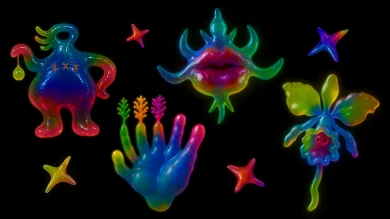
equipoMotor
Jueves alternos, 23 de octubre, 2025 - 11 de junio, 2026 - 17:30 h
El programa equipoMotor regresa en su edición 25-26 con un aire espectral y mutante para lanzar la pregunta: ¿y si el Museo fuera «un poco más Frankenstein»? Inspirándose en dicho monstruo y en todas aquellas criaturas que desafían la norma desde los márgenes, el proyecto de mediación cultural Galaxxia diseña y acompaña una edición incisiva, intergeneracional y descentralizadora, donde saberes invisibilizados, cuerpos raros y deseos molestos se entrelazan para generar nuevas formas de imaginación crítica y radical. En los sótanos y corredores del Museo —un particular laboratorio— las dudas no se esconden: son materia prima.
Así, para este curso el equipoMotor convoca a personas de todas las edades que hayan participado en ediciones anteriores de los distintos equipos del Área de Educación a recorrer el Museo como quien manipula un cuerpo abierto: descoyuntando algunas de sus categorías teóricas y artísticas —la necropolítica, lo crip-cuir, la lucha de clases, las políticas del malestar, la decolonialidad, la temporalidad cuir, la descentralización institucional o el feísmo— para articular un relato díscolo, remendado y palpitante.
El programa se estructura en bloques temáticos sobre lo freak como metodología, el trabajo cultural, la intergeneracionalidad y la diversidad territorial. Cada bloque a su vez se despliega en sesiones que combinan disparadores teóricos y estéticos, visitas a exposiciones y espacios liminales del Museo, talleres artísticos con artistas, ejercicios de curaduría audiovisual colectiva y de relatoría radiofónica, así como instancias de activación pública, mediante proyecciones de cine experimental y coloquios compartidos con el público, en complicidad con el archivo Hamaca y el Área de Cine y Nuevos Medios del Museo.
De este modo, la presente edición incorpora una particularidad: el grupo de participantes irá transformándose en un «colectivo curatorial audiovisual temporalmente autónomo», con capacidad de incidir en la programación del Museo y de abrir la conversación de equipoMotor al público general, cuestionando y expandiendo así los límites entre las cabezas que deciden, las manos que producen y los cuerpos y presencias que habitan la institución. Las personas seleccionadas en la modalidad oyente serán invitadas a las proyecciones públicas, así como a otras activaciones y momentos de apertura del equipoMotor.
Frente al relato de un museo homogéneo, pulcro y lineal, apostamos por un Museo disidente, contradictorio y lleno de vida residual. Un Museo que no tema hacerse preguntas incómodas ni mostrar sus cicatrices. equipoMotor. Un poco más Frankenstein no busca repensar el cuerpo de la institución, sino habitarlo en sus desgarros, tal como es: híbrido, inacabado, infecto, fantasmagórico… y cargado de esporas y chispas por venir.